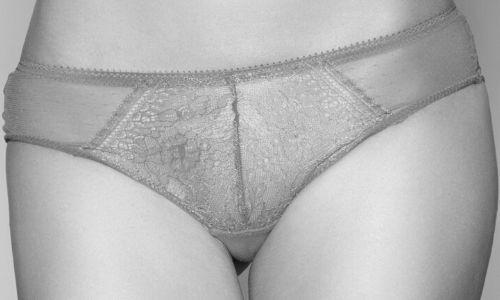
Vücut Şekillendirmede Üst ve Alt Vücut Oranı
Click to rate this post!
[Total: 0 Average: 0]

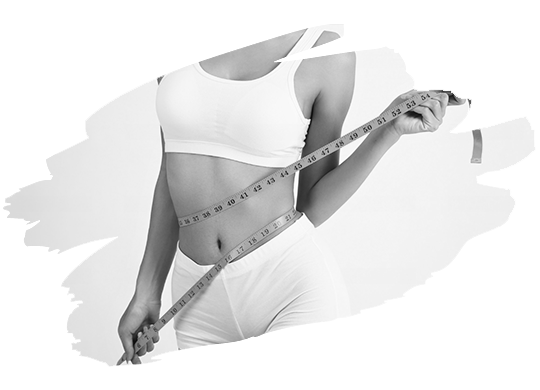
Body aesthetics is not just about slimming the waist, shaping the buttocks, or tightening the abdomen.
True transformation involves harmonizing the upper body, waistline, hips, and legs together.

In some individuals, the upper body may appear long while the legs look short. In others, the hips are wide but the waistline is undefined.
The goal is not to make a single area “beautiful” but to create overall balance.

In a properly planned contour:

  • The torso appears proportionally shorter or longer
  • The waist curve becomes defined
  • Hip roundness develops in the correct direction
  • Legs appear longer
  • The silhouette is rejuvenated as a whole

Aesthetics is not about individual limbs but the art of balance.

In Aesthetic Surgery Region-Structural Analysis

In aesthetic planning, all structures that need to be evaluated are analyzed together:

  • Lower body length
  • Groin angle and pubis area
  • Hip width and projection
  • Inner–outer thigh contour relationship
  • Knee line and calf shape
  • Waist notch and torso proportion

It is incorrect to view the body in three separate parts; there is a single aesthetic flow.

Contact Us


Vücut Şekillendirmede Üst ve Alt Vücut Oranı

Redesigning the Natural Flow of the Body

Redesigning the Natural Flow of the Body

Modern body aesthetics is not just about adding or removing volume;
it is about building lines.

With proper planning:

  • While narrowing the waist, the torso is not flattened
  • While supporting the buttocks, the waist indentation is preserved
  • While slimming the leg contour, the volume is not collapsed
  • While tightening the abdomen, the waist curve is not lost

When this harmony is achieved, the body is perceived as:

  • Younger
  • More proportional
  • Lighter
  • More dynamic

Planning Key Points

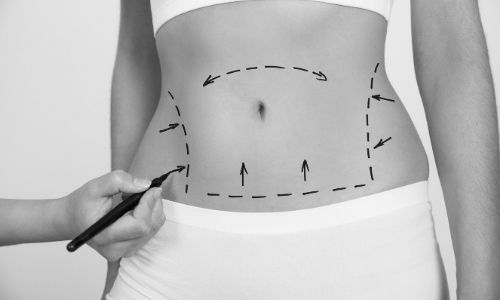
Body contouring planning is not limited to deciding only on regional fat removal or volume enhancement; the waist indentation must be properly activated, the lateral hip curve must be designed to create a natural silhouette, and gluteal projection must be increased in a balanced way without overcorrection. Likewise, smoothing the thigh line is important to ensure that the inner and outer leg contours remain balanced and to provide a natural transition to the buttock crease.

All these processes are carried out in line with the logic of lower body lifting; in other words, the tissues are not only reshaped but also supported upward against the effects of gravity. In the final stage, by considering skin quality and tissue resilience, collagen-boosting treatments and biologically supportive approaches that accelerate healing are introduced. Thus, the body becomes strengthened not only in form but also in tissue quality, and over time a more natural, long-lasting aesthetic integrity emerges.

Posture, Silhouette and The Effect of Movement

Esthetics is not only static; the body should appear fluid while walking, sitting, and turning.
Therefore, planning is based not only on fat ratio but also on fascia tension, muscle strength, and skin elasticity.

The aesthetic result is validated not by appearance but by movement:
The body flows naturally, the lines settle, and the silhouette strengthens gracefully.

A beautiful body is not a figure, but correctly proportioned anatomy.
Surgery is only one part of this; the rest is tissue quality, movement, metabolic support, and posture management.

These articles are written for informational purposes. You need to consult your doctor to determine whether the procedure should be performed and which treatment is suitable for you.

Comments

Leave a Reply

Your email address will not be published.

TOP