Post-Bariatrik, Post-Bariatric
Click to rate this post!
[Total: 0 Average: 0]

Can Arm Lift and Breast Lift Be Performed at the Same Time?

During the post-bariatric period, patients may experience significant weight loss and face severe sagging in body contours. In this process, arm lift and breast lift procedures are frequently preferred to achieve an aesthetic body recovery. Correcting both areas together offers patients major advantages in terms of improving their overall aesthetic appearance.

Advantages of Combined Operations

In post-bariatric surgery, performing two different lift procedures simultaneously provides patients with multidimensional benefits. First of all, undergoing a single operation instead of separate surgeries significantly reduces the total duration of general anesthesia. In this way, patients experience less physical strain and complete the recovery period in a much more comfortable and convenient manner.

This tremendous time-saving advantage accelerates the body contouring process the patient has been hoping for. As a result, removing sagging tissues in a single session also greatly increases psychological motivation.

Ideal Candidates for Arm Lift and Breast Lift

Individuals considered for simultaneous operations must fully meet certain medical and physical eligibility criteria, because these specific criteria directly and strongly affect both the success of the surgical procedure and the patient’s health:

  • After the post-bariatric weight loss process, at least one full year should ideally have passed safely from the date of weight loss surgery so that the body can fully regain physiological balance.
  • Patients should have maintained a stable body weight without fluctuations for the last six months, which is highly critical to prevent new aesthetic sagging after the operation.
  • Suitable aesthetic candidates are those who experience visible and severe volume loss in the breast tissue and, at the same time, have serious skin laxity under the arms that negatively affects daily quality of life.
  • Highly motivated and determined patient profiles who are fully prepared psychologically and mentally for this demanding recovery process, in which two different surgical areas will heal at the same time, are considered suitable candidates.

Contact Us


Post-Bariatrik, Post-Bariatric

Preoperative Medical Evaluation

When planning this type of combined surgery, the patient’s current health status is the most critical determining factor.

Blood values of post-bariatric patients must be examined in detail, and the heart’s ability to tolerate anesthesia must be carefully evaluated by specialist physicians.

Brachioplasty and Correction of Arm Sagging

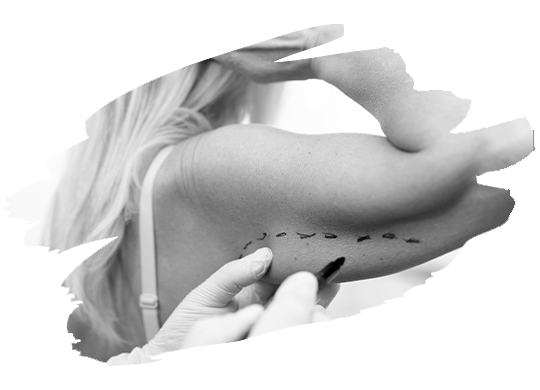
Arm lift surgery, medically known as brachioplasty, is the removal of excess sagging skin between the elbow and the armpit.

In patients with a post-bariatric history, the incisions in this area are hidden in less visible regions, allowing a highly aesthetic and smooth arm profile to be successfully created.


Volume Restoration During Breast Lift

Excessive weight loss causes not only sagging but also significant structural volume loss in the breasts.

To improve the aesthetic appearance, tightening the skin alone may not be sufficient; therefore, breast implant placement may be required. In this way, extremely lifted and ideal breast contours can be achieved through post-bariatric operations.

Reshaping Body Proportion

After massive weight loss, breast deflation and sagging skin on the arms negatively affect the overall appearance of the body. Simultaneous intervention in these areas restores symmetry in the upper body and provides aesthetic harmony.

The greatest advantage of post-bariatric operations is the permanent removal of deformed skin that has lost its elasticity. After the procedure, the upper body gains a much more proportional, firm, and youthful appearance. The increase in patients’ freedom of clothing choices and the positive acceleration in their participation in social life demonstrate how effective this surgery can be.

Anesthesia and Surgical Duration in Combined Operations

Performing two different aesthetic corrections in a single session is an important factor that may extend the total surgical time. At this point, the physical endurance of the post-bariatric patient and the operational speed of the surgical team must be carefully balanced.

Since excessively prolonged anesthesia duration may create risks, surgeons plan the procedure while staying within maximum safety limits. If the patient’s health profile cannot tolerate a long period under anesthesia, comprehensive sagging repairs in the arm and breast areas can also be successfully organized in separate sessions at safe intervals instead of a single session.

Risk Management in Simultaneous Surgery

As with every surgical procedure, combined operations also carry certain medical risks. However, in well-equipped centers, surgeries performed by specialist physicians experienced in post-bariatric processes can successfully minimize anesthesia-related complications or bleeding risks.

What Should Be Considered During the Recovery Period?

After surgery, the care steps patients follow at home are highly important for a safe and fast recovery process. Therefore, the following rules must be followed carefully and strictly as a medical necessity:

  • Special medical corsets specifically recommended by surgeons should be worn regularly day and night after the operation to reduce pressure on the suture areas and support shaping perfectly.


  • During the recovery period, patients should always keep their arms positioned above heart level while lying down or sitting. This simple but effective position helps disperse intense edema that may develop in the body.
  • During the first weeks after the operation, using the arms for tiring tasks that require excessive effort is strictly prohibited. All heavy physical activities should be carefully avoided until approval is received from the specialist doctor.
  • To increase the body’s repair speed and maximize post-bariatric tissue regeneration at the cellular level, a healthy nutrition program rich in protein and vitamins should be followed precisely.

How Medical Scars Change Over Time

The condition of surgical incision scars is one of the most sensitive issues for patients planning aesthetic surgery. These scars may be noticeably red in the early period, but as the post-bariatric healing process progresses over the months, they gradually fade and begin to adapt to the patient’s natural skin tone.

Specialist surgeons carefully hide these scars in body folds that are away from direct eye contact. With the use of recommended wound care creams during the healing phase and high-protection sun precautions, scar permanence is minimized. Over the years, these medical scars become faint and reach a level that can be considered negligible compared to the aesthetic body form achieved.

Returning to Daily Life After Combined Surgeries

Returning to daily routine life after simultaneous breast and arm aesthetics depends directly on the patient’s general health discipline. Tightness and edema felt in the arms during the first weeks are completely normal medical reactions.

Post-bariatric patients can generally return to desk work and light-paced walks comfortably within one month. Consuming plenty of fluids during the recovery phase and staying away from stress factors that tire the body significantly increase the body’s self-repair speed. When all recovery protocols are followed, aesthetic recovery in the body is completed in a much smoother and more permanent way.

Comments

Leave a Reply

Your email address will not be published.

TOP